 +565 975 658
 info@premiumcoding.com
 Monday - Friday, 8.00 - 20.00

Prof. Jiandong DING establishes a set of equations for random degradation and achieves full-chain results on polymer coating-mediated control of “acquired heterogeneity” in metal corrosion
【Abstract】Non-uniform degradation of materials does not always originate from initial congenital defects or spatial heterogeneity in the service environment. Any stochastic degradation process will inevitably acquire heterogeneity over time. However, a fundamental theoretical framework for this phenomenon has long been lacking, and even the quantitative parameters for this “acquired heterogeneity” had not been established, severely influencing the reliability of related devices during service. Controlling this “acquired heterogeneity” resulting from stochastic degradation is particularly crucial for medical devices such as bioresorbable vascular stents, as the “short-board” effect induced by such non-uniform degradation can lead to unpredictable premature fracture of certain stent segments.After prolonged contemplation, Professor Jiandong Ding of Fudan University, inspired by the classic “Poisson raindrop question” in mathematics, derived a set of equations for the spatiotemporal evolution of random degradation. He and his students then employed this framework to quantitatively compare the extent of acquired corrosion heterogeneity in biodegradable metals with and without polymer coatings. The Fudan team discovered that a polylactide (PLA) coating can increase the corrosion rate of iron by threefold while simultaneously reducing its corrosion inhomogeneity to as low as 1/4000 of its original level in a biomimetic medium. This finding overturns conventional wisdom – despite accelerated corrosion, the fracture of the device is paradoxically delayed.Through a long-term collaboration among Fudan University in Shanghai, Fuwai Hospital in Beijing, and Biotyx Medical (a subsidiary of Lifetech Scientific) in Shenzhen, a full-chain research achievement has been realized. A bioresorbable metal-polymer composite stent with controllably biodegradable properties has been developed, effectively mitigating the risk of early fracture in cardiovascular interventional therapy. Preclinical studies in large animal models, multi-cohort clinical implantation trials involving 1,108 patients, and 5-year follow-up results from the initial 45 first-in-human (FIH) cases have collectively confirmed the favorable safety and efficacy of this metal-polymer composite bioresorbable stent, which integrates a hydrolyzable polymer with a corrodible metal. The theoretical framework of this work is, in principle, extensible to fields such as ship corrosion, bridge fracture, climate variability, biological evolution, and fluctuations in big data – any area where random spatiotemporal variability gives rise to acquired heterogeneity that compromises system reliability.
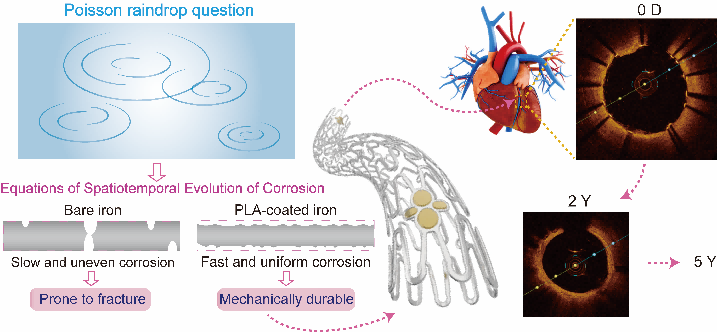
In the field of biodegradable implantable devices, a critical yet long-overlooked factor determining success or failure is “acquired heterogeneity”. This refers to the inherent non-uniform degradation that emerges and intensifies over time during service, rather than stemming from manufacturing defects. Quantifying and controlling this intrinsic randomness is particularly vital for biodegradable implants, which must balance mechanical strength with degradation behavior. This is especially pertinent in the realm of cardiovascular stents. Corrodible metals like iron, while possessing ideal mechanical properties and thus serving as the earliest substrate for biodegradable coronary stents studied by German and then other researchers, were also among the first to be dismissed – a conclusion that had been a prevailing “common sense” in the academic community for a long time. The reasoning was that iron corrodes too slowly in the physiological environment and is susceptible to localized corrosion, forming mechanical weak points that lead to unpredictable early fractures.
Professor Jiandong Ding, Director of the State Key Laboratory of Molecular Engineering of Polymers at Fudan University and an expert in biomedical materials, has overturned this “common sense” by integrating polymer science and other disciplines. Inspired from the classical mathematical “Poisson raindrop question”, Ding derived a set of equations for random degradation, enabling the quantitative characterization of corrosion inhomogeneity in biodegradable metals. The Ding team found that a polylactide (PLA) polymer coating increases the corrosion rate of the iron substrate by threefold but reduces its inhomogeneity by over 4000-fold, ultimately leading to later fracture and enhanced durability of the iron wire despite faster degradation. Based on this discovery, a tripartite collaboration among Fudan University, Fuwai Hospital, and Biotyx Medical developed an ultra-thin biodegradable metal-polymer composite stent. Its safety and efficacy were validated in a large-scale clinical cohort of 1,108 patients and 5-year follow-up of 45 first-in-human (FIH) cases.
Building upon his equation set for random degradation, Professor Ding proposes a new parameter, Γ to quantify the acquired heterogeneity of metal corrosion. This parameter is defined as the average corrosion depth (dcorro, the mass-loss-equivalent depth) at which the corrosion coverage (θ) reaches 50%. A smaller Γ indicates more uniform corrosion (Figure 1).
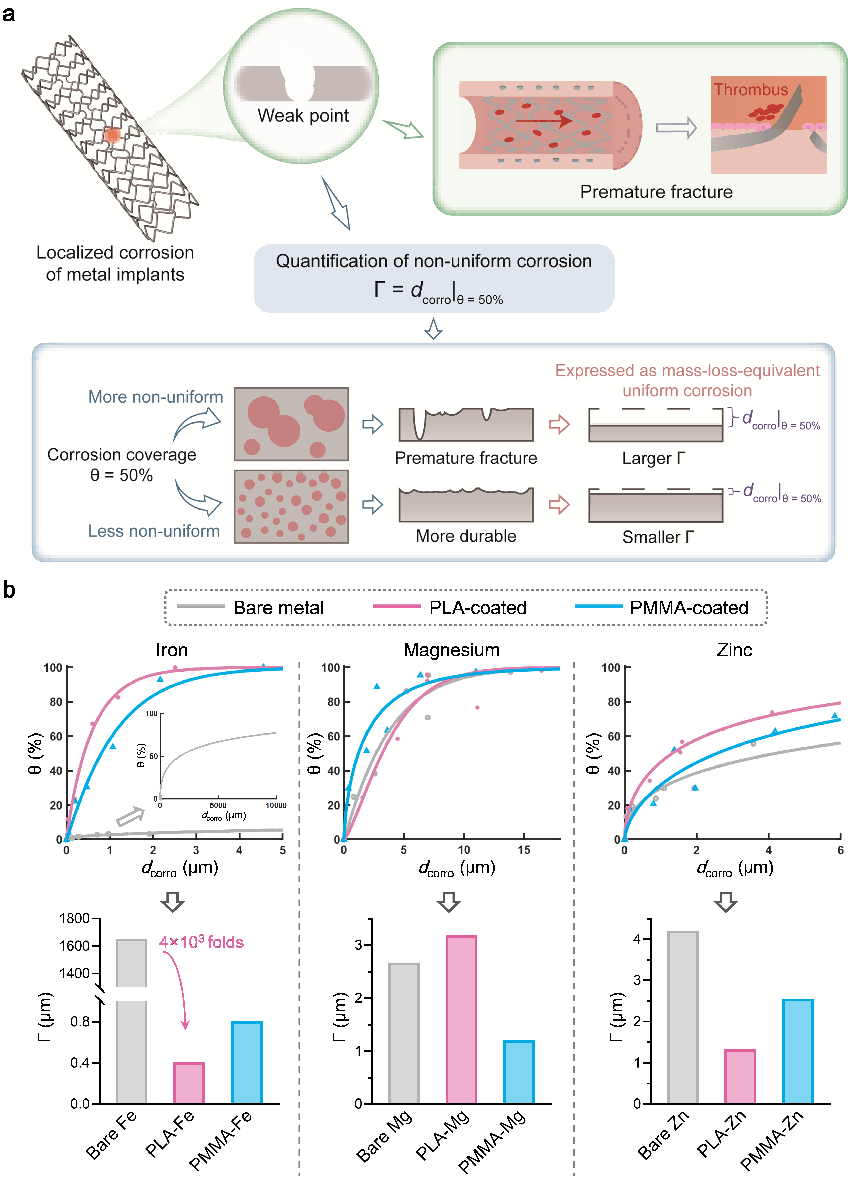
Figure 1. Schematic illustration of the hazard of non-uniform degradation for vascular stents and the proposition of the quantitative parameter Γ for metal corrosion inhomogeneity.
Subsequently, the Ding team systematically investigated the effects of biodegradable PLA and non-biodegradable PMMA coatings on the corrosion inhomogeneity of three biodegradable metals, namely Fe, Mg, and Zn. The results revealed that PLA coating exerted the most significant regulatory effect on the corrosion inhomogeneity of iron, reducing its Γ value by over 4000-fold. While bare iron corroded extremely non-uniformly in blood-mimetic Hank’s solution, the PLA coating significantly suppressed the excessive deepening of pitting, resulting in a more uniform corrosion distribution (Figure 2).
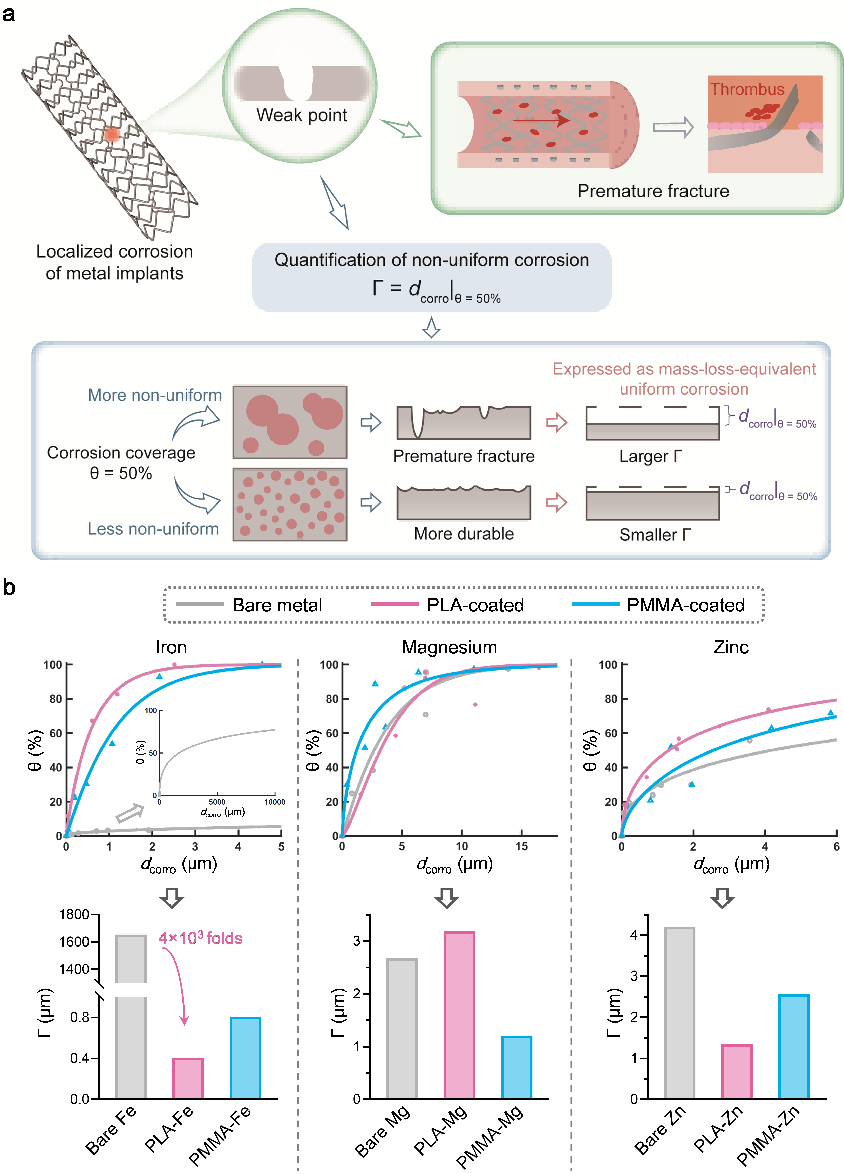
Figure 2. Corrosion coverage (θ) versus average corrosion depth (dcorro) curves for bare, PLA-coated, and PMMA-coated Fe, Mg, and Zn, obtained experimentally and fitted with the derived equations, along with the corresponding Γ.
The corrosion process can be viewed as the spatiotemporal evolution of random nucleation and growth. Professor Ding posited that random nucleation is analogous to Poisson raindrops, and the “ripples” caused by raindrops correspond to the fronts of corrosion pits. From this analogy, he derived the quantitative relationships among corrosion coverage, depth, and time, establishing the equation set for random degradation and defining the parameter Γ for the quantitative description of corrosion inhomogeneity (Figure 3). This theoretical framework provides a mathematical tool for describing “acquired heterogeneity”, and is, in principle, applicable not only to metal corrosion but also to other stochastic degradation systems such as polymer hydrolysis and ceramic erosion.
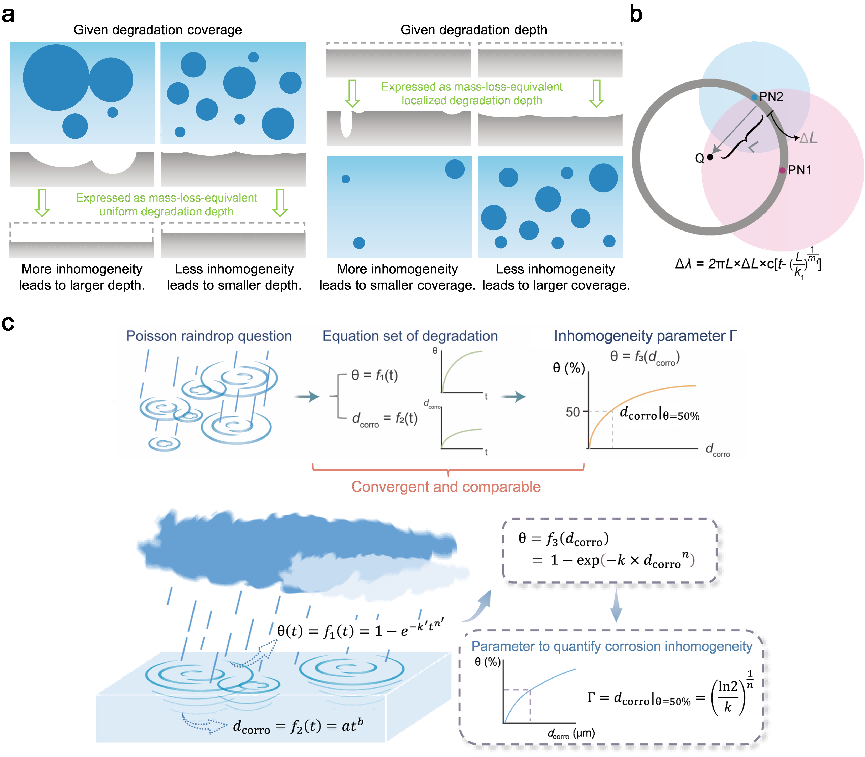
Figure 3. Innovative quantification methodology for degradation heterogeneity. (a) Schematic presentation of different extents of degradation heterogeneity, emphasizing the relationship between degradation coverage and depth. (b) Schematic illustration of Poisson raindrops and “ripples”. (c) Fundamental logic behind the derivation of the equation set for random degradation, culminating in the proposal of the degradation inhomogeneity parameter Γ.
The Fudan research team led by Ding systematically examined the influence of polymer coatings on the corrosion rates of the three metal substrates. The results demonstrated that the PLA coating had the most pronounced effect on the iron substrate, increasing its corrosion rate by more than threefold in blood-mimetic Hank’s solution. This strategy of using polymer coatings to modulate metal corrosion was validated across various media, including deionized water, normal saline, artificial seawater, and phosphate-buffered saline (PBS), confirming its universality (Figure 4). Crucially, the PLA coating enables iron to achieve “fast and uniform” corrosion in the physiological environment, overcoming the inherent slow degradation of iron-based materials while preserving their excellent mechanical properties – a combination that renders them highly promising for coronary stent applications.
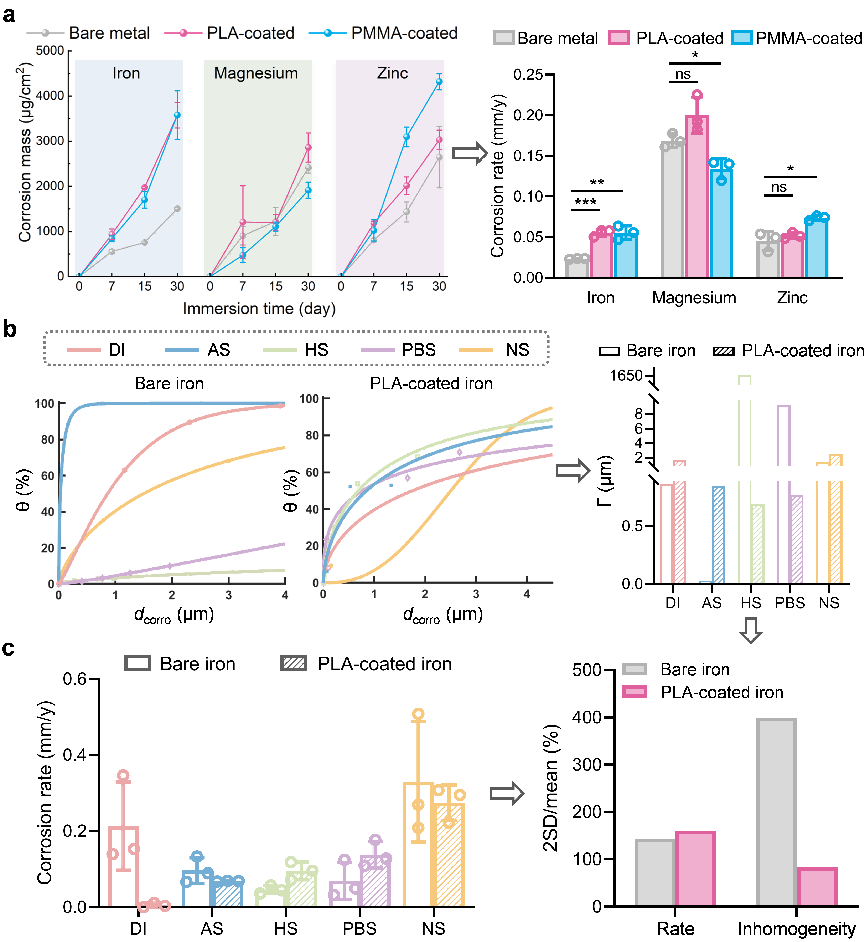
Figure 4. Influence of polymer coatings on metal corrosion rate and inhomogeneity in different immersion media. (a) Corrosion mass over time (left) and corrosion rates (right) of bare, PLA-coated, and PMMA-coated Fe, Mg, and Zn after 30 days of immersion in Hank’s solution. (b) θ - dcorro curves and Γ for bare and PLA-coated Fe after immersion in 5 different media. DI: deionized water; AS: artificial seawater; HS: Hank’s solution; PBS: phosphate-buffered saline; NS: normal saline. (c) Corrosion rates of bare and PLA-coated Fe in 5 different media (left), and the ratio of double standard deviation (2SD) to the mean for corrosion rate and Γ of bare and PLA-coated Fe in the 5 different media (right).
Regarding the dual regulatory effect of the PLA coating on the iron substrate, the Ding team further elucidated the underlying mechanisms. On one hand, PLA hydrolysis generates an acidic microenvironment, lowering the pH at the PLA-coating - Fe interface from 7.4 to approximately 5.6. On the other hand, the PLA coating effectively inhibits the deposition of a Ca-P passivation layer on the iron surface. The synergistic effect of these two factors reduces the energy barrier for pit nucleation, promoting the rapid formation of numerous shallow pits. This transforms the corrosion mode from “deep and few” to “shallow and many”, thereby simultaneously enhancing both the corrosion rate and uniformity (Figure 5).
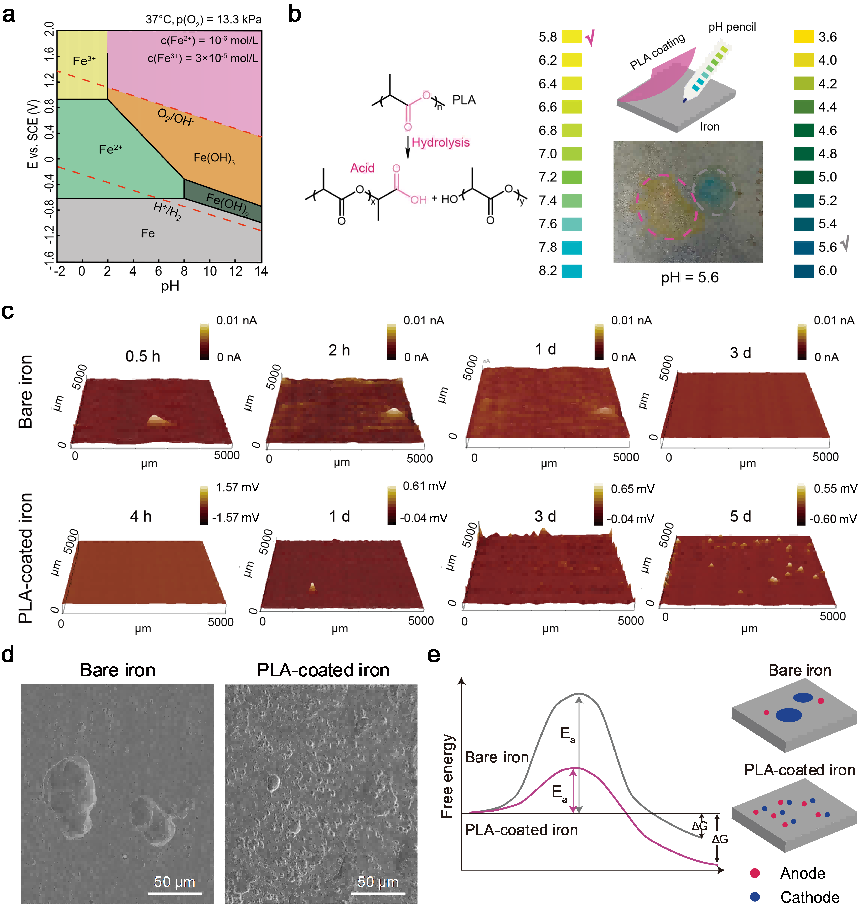
Figure 5. PLA coating accelerates iron corrosion and promotes uniform corrosion by inhibiting Ca-P deposition and lowering the pH at the PLA-Fe interface. (a) Pourbaix diagram of iron corrosion under physiological conditions showing low pH drives corrosion. (b) Chemical equation for PLA hydrolysis generating acidic products (left). Top right schematic and bottom right photograph showing pH values at the PLA-Fe interface measured using two different series of pH pencils. Both series indicate a PLA-Fe interface pH of ~5.6, lower than the medium pH (~7.4). (c) SECM images of bare and PLA-coated Fe after immersion in Hank’s solution. Bare Fe formed corrosion pits earlier, while PLA-coated Fe developed a high density of shallow pits over time. (d) SEM images of bare and PLA-coated Fe surfaces after 7 days of immersion in Hank’s solution. (e) Schematic illustration showing the lowered energy barrier for pit nucleation on the PLA-coated Fe substrate, leading to the formation of numerous but shallow pits on the surface.
Mechanical tests revealed that despite greater corrosion mass loss, the PLA-coated iron wires exhibited significantly higher ultimate strength and elongation at break than bare iron wires after 30 days of immersion. In their fatigue tests, bare iron wires fractured at approximately 19,000 cycles, whereas PLA-coated iron wires remained unbroken even after 40,000 cycles (Figure 6). This counterintuitive result – “faster corrosion yet later fracture” – is attributed to the elimination of localized weak points by uniform corrosion; even though the overall strength decreases, structural integrity is preserved.
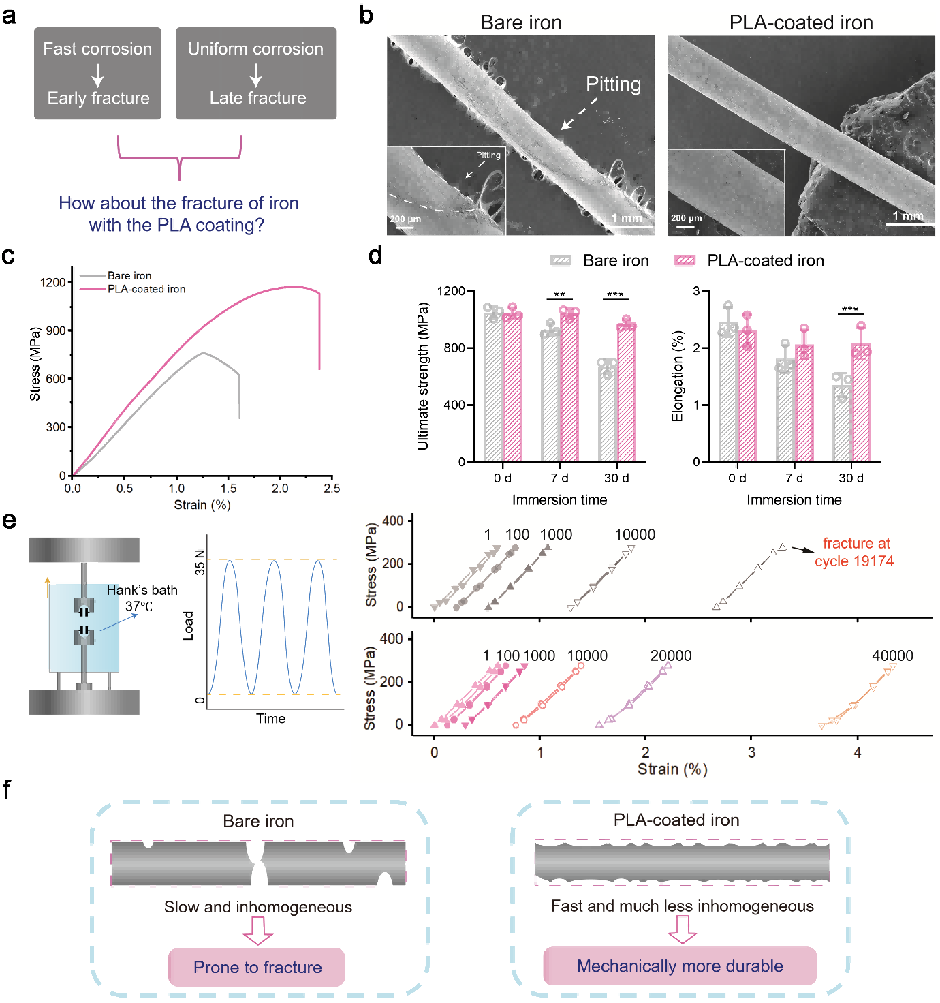
Figure 6. PLA-coated iron exhibits fast but relatively uniform corrosion in a blood-mimetic medium, conferring resistance to fracture and fatigue. (a) Schematic outlining the mechanical paradox of PLA-coated iron undergoing fast yet uniform corrosion. Fast corrosion often leads to early fracture, while uniform corrosion delays it. (b) SEM images confirming localized deep pits on bare iron wire surfaces. (c) Stress-strain curves of bare and PLA-coated iron wires after 7 days of immersion in Hank’s solution. (d) Ultimate strength (left) and elongation at fracture (right) of the two wires. (e) Schematic of the cyclic immersion fatigue test (left). Right panel shows stress-strain hysteresis loops under cyclic compression (1 Hz) for bare (top) and PLA-coated (bottom) iron wires after 7 days of corrosion. The PLA-coated iron did not fracture up to the maximum cycles tested, while bare iron fractured at the indicated cycle. (f) Schematic illustrating the scientific principle behind the “anomalous” corrosion-fracture resistance of PLA-coated iron.
Based on these findings, the cooperation team developed a biodegradable and controllable PLA-coated iron-based stent (Figure 7) that effectively mitigates the risk of early fracture in cardiovascular interventional therapy.
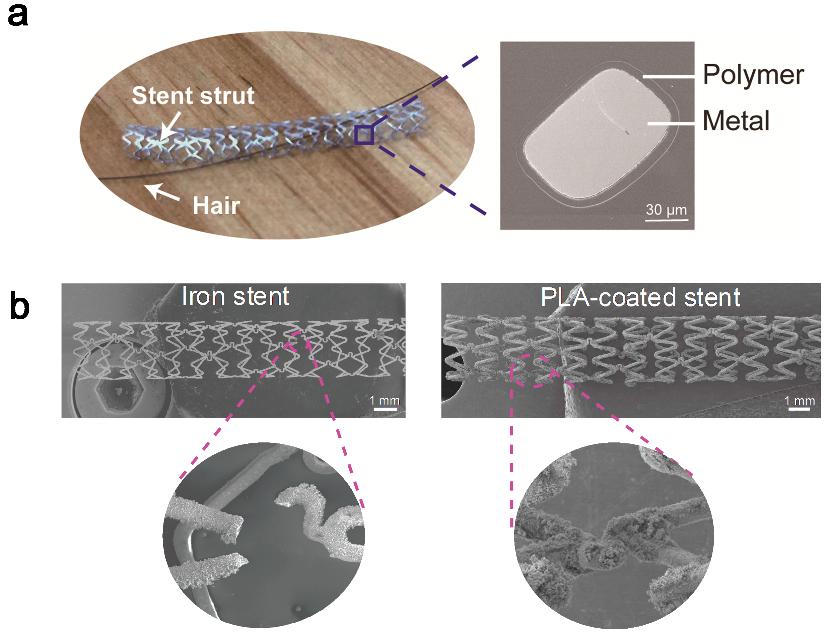
Figure 7. Biodegradable and controllable PLA-coated iron-based stent. (a) Overall (left) and cross-sectional (right) views of an as-prepared PLA-coated iron stent. A strand of hair from the last author is shown for scale, demonstrating that the stent struts are as thin as hair. (b) SEM images of bare (left) and PLA-coated (right) iron stents after immersion in Hank’s solution. The bare stent shows local fracture.
The safety and efficacy of this stent have undergone validation through three tiers of evidence: preclinical studies in porcine models, multi-cohort clinical trial implantations involving 1,108 patients, and complete 5-year follow-up of 45 FIH cases. Core clinical data reveal: 0 cases of cardiac death, 0 cases of target vessel myocardial infarction, 5 cases of clinically driven target lesion revascularization, a target lesion failure (TLF) rate of 11.1%, and a 0% incidence of stent thrombosis (Figure 8). This long-term performance surpasses that of the discontinued Absorb BVS, the world’s first commercially available bioresorbable coronary stent made entirely of biodegradable polymer, and also compares favorably with the current gold-standard Xience stent, which is based on non-degradable metal.
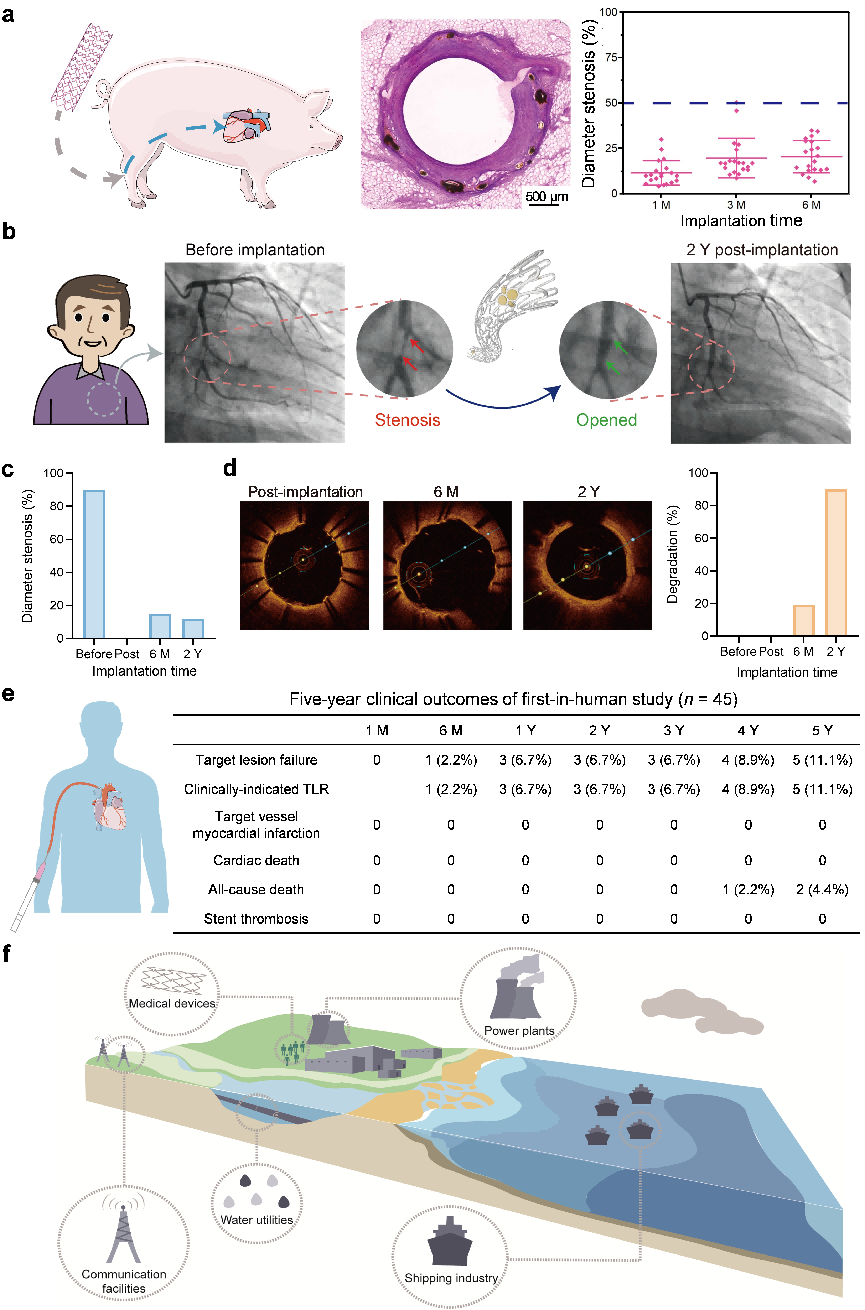
Figure 8. Clinical results of the PLA-coated stent. (a) Schematic of the minimally invasive transcatheter implantation of the PLA-coated iron stent into the coronary artery of a Bama pig via the femoral artery (left). Representative H&E stained image at 1-year post-implantation (middle). Statistical distribution of diameter stenosis rate for the PLA-coated stent (n = 20) (right). Data are shown as mean ± s.d. The dashed line indicates the clinical criterion for significant in-stent restenosis (diameter stenosis ≥ 50%). (b) Coronary angiography images of a male patient’s LCx coronary artery before and 2 years after PLA-coated stent implantation. (c) Calculated diameter stenosis values for the patient in b. (d) OCT images of the patient at 6 months (6 M) and 2 years (2 Y) post-implantation (left). Stent degradation percentage was calculated based on OCT images using the formula: Degradation = , where di is the degradation level and Ni is the corresponding count. (e) Clinical outcomes of the PLA-coated iron stent for all 45 FIH cases.
The theoretical framework and polymer coating strategy established in this study have implications far beyond the field of vascular stents. Any scenario where “acquired heterogeneity” arises from random spatiotemporal variability and affects system reliability – such as in ships, hydraulic structures, biological evolution, and even big data analytics – stands to benefit from the insights provided herein (Figure 9).
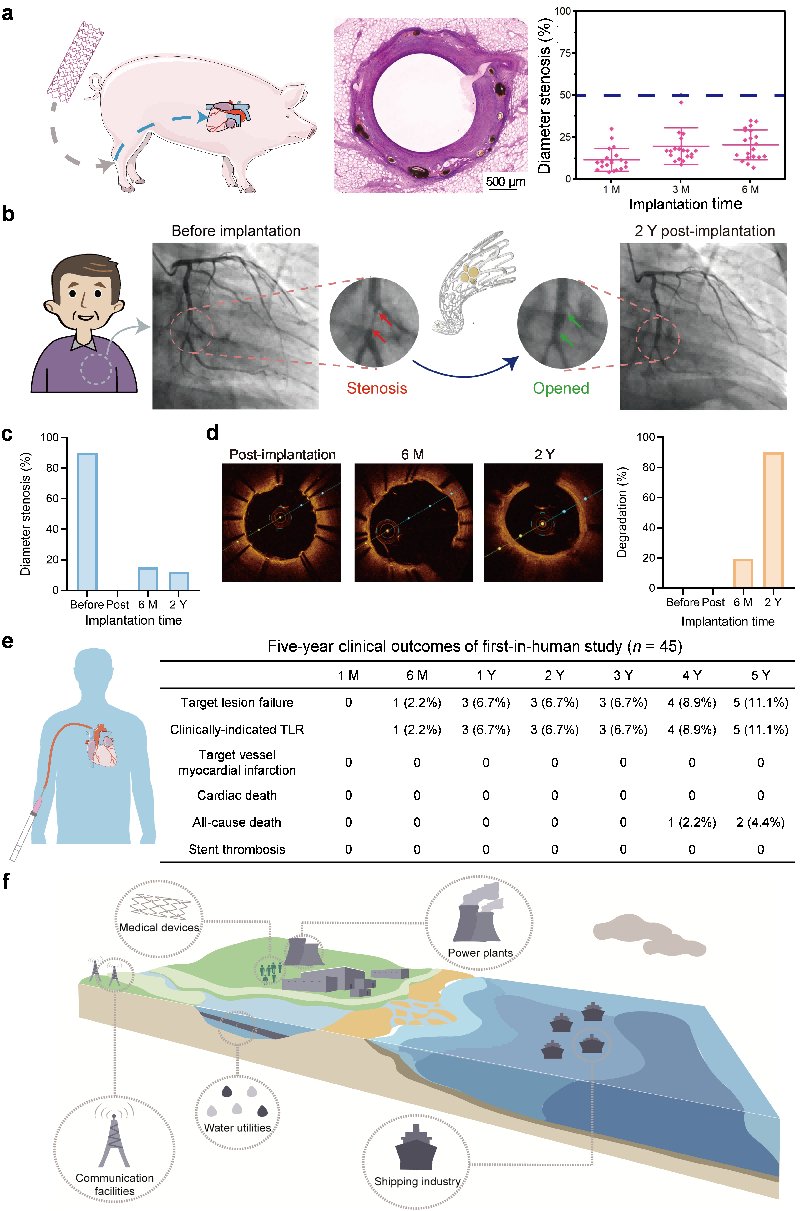
Figure 9. The equation set for random degradation and the fundamental theoretical framework of this work are potentially extensible to various other fields.
This full-chain research has spanned nearly two decades. Throughout this process, Professor Ding not only led a key project of the National Natural Science Foundation of China, independently undertaken by Fudan University, but also twice headed major national research programs (National Basic Research Program of China and National Key R&D Program of China) that involved collaboration among the university, hospital, and company. Professor Ding’s graduate students have carried out this work in succession, forming a research “relay”. The article titled “A set of equations for random degradation quantifies the role of polymer coatings in mitigating the acquired heterogeneity of corrodible metals for biodegradable stents” represents the culmination of years of dedicated effort and was published in 2026 in Science China Materials, a Chinese journal with international impact.
Dr. Xin Li and Ms. Wenjie Wu from the Department of Macromolecular Science at Fudan University, are the co-first authors of the paper. Their supervisor, Professor Jiandong Ding of Fudan University, is a corresponding author. The technical leads from the partner institutions, Professor Runlin Gao of Fuwai Hospital and Dr. Deyuan Zhang of Lifetech Scientific, are co-corresponding authors.
Paper Information: Xin Li#, Wenjie Wu#, Wanqian Zhang, Hong Qiu, Xun Ma, Hongjie Zhang, Yongli Qi, Haiping Qi, Ye Fu, Lei Song, Ying Xia, Xiaoye Yu, Qunsong Wang, Gui Zhang, Jie Qian, Deyuan Zhang*, Runlin Gao*, Jiandong Ding*,A set of equations for random degradation quantifies the role of polymer coatings in mitigating the acquired heterogeneity of corrodible metals for biodegradable stents, Sci. China Mater., SCMs-2026-0827 (2026)
Original Article Link:https://link.springer.com/article/10.1007/s40843-026-4230-8
【Author Biographies】

Jiandong Ding is a Distinguished Professor in the Department of Macromolecular Science at Fudan University and the Director of the State Key Laboratory of Molecular Engineering of Polymers. He received his B.S. in Biophysics (1988), M.S. in Polymer Chemistry and Physics (1991), and Ph.D. in Macromolecular Science (1995) from Fudan University. He conducted postdoctoral research at the Department of Materials Science, University of Cambridge, UK (1998-1999). After returning to China, he established a new research direction, focusing on fundamental research in molecular engineering of polymers and full-chain research on biomedical materials, supported by several national talent programs. He has been consecutively named a Highly Cited Scholars for 11 years, and joined in drafting a biomaterial standard which has been approved by ISO. He has received the First Prize of Shanghai Scientific and Technological Progress Award, the First Prize of the Natural Science Award from the Ministry of Education, and a Gold Medal at the International Exhibition of Inventions in Geneva. His research was recognized by IUPAC as one of the Top Ten Emerging Technologies in Chemistry in 2025.

Deyuan Zhang is the chief technical officer at Biotyx Medical (Shenzhen) Co., Ltd. He received his M.S. from Southeast University in 1990 and his Ph.D. from the University of Science and Technology Beijing in 2001. His research focuses on the development of interventional cardiovascular medical devices, particularly iron-based bioresorbable scaffold systems.

Runlin Gao is a Chief Physician at Fuwai Hospital and an Academician of the Chinese Academy of Engineering. He received his B.S. from Beijing Medical University in 1965 and his M.S. from Peking Union Medical College in 1981. With extensive experience in clinical practice and scientific research in cardiovascular medicine, he is one of the pioneers of interventional cardiology in China and a cardiovascular clinician with global impact.
Get to know us better now!

Wechat:FDUMMers
Search!
Search across our website

Revenant @ 2018 by fudan | All Rights Reserved
Powered by Weicheng